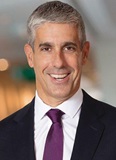
One minute with Tom Pygall, Head of Tax at Clear Group.
What is keeping you busy at work?
Having recently joined Clear Group as Head of Tax, much of my focus has been on helping clients and advisers understand where tax insurance can solve real commercial problems. While tax insurance remains well established in the M&A market, we are increasingly seeing demand in areas such as tax disputes, operational risk, restructurings and other situations where uncertainty is preventing businesses from executing transactions, returning capital or moving forward with confidence.
What does being Head of Tax at an insurance broker involve?
My role involves working with taxpayers, advisers, lawyers and insurers to assess whether a particular tax uncertainty can be transferred to the insurance market and, if so, on what terms. A technically strong position may be difficult to insure because the facts are incomplete or the implementation history creates concerns. Conversely, a risk that initially appears challenging may become highly insurable once the facts are properly understood and presented.
The most difficult judgement is often trying to predict how a tax authority, tribunal or court might view a matter several years into the future. Tax is not simply about legislation; human behaviour, evidence, policy intent and litigation strategy all play a part.
As well as underwriting tax insurance, I’ve worked at HMT, City law firms, one of the Big Four and HMRC Solicitor’s Office. That has taught me that technical correctness is only part of the answer. Understanding how different stakeholders think is often just as important.
Your experience spans tax law, coding and AI. Where do you see AI making the biggest difference to tax work?
AI’s greatest near-term impact will be in reducing the time spent on research, document review and compliance processes. However, there is a danger that the profession occasionally underestimates AI’s limitations. Tax outcomes can turn on very small factual distinctions, and poor inputs can generate highly persuasive but entirely incorrect conclusions. The technology is improving rapidly, but for the foreseeable future I see AI as a force multiplier for good advisers, rather than a substitute for them.
What do you know now that you wish you’d known at the start of your career?
That some of the most valuable insights come from experiences outside your immediate specialism. To borrow a phrase from The Thick of It, ‘helicopter thinking’ often leads to better solutions because it allows you to connect issues, disciplines and perspectives that others might view in isolation.
If you could make one change to a tax law or practice, what would it be?
Governments should spend less time introducing new tax rules and more time assessing whether existing ones have actually achieved their intended objectives.
A more rigorous culture of post-implementation review would improve policymaking, reduce unnecessary complexity and help ensure that tax rules continue to meet their original objectives.
You might not know this about me but...
Tax was probably unavoidable as a career. Both of my parents worked for HM Customs & Excise as criminal investigators. One of my first jobs involved helping the Customs & Excise photographic unit catalogue and photograph contraband for evidential purposes, which felt considerably more exciting than reading tax legislation.
I eventually found my way into tax, although I still get my adrenaline fix through competitive sailing, and I’ve had the privilege of sailing alongside an Olympic gold medallist.