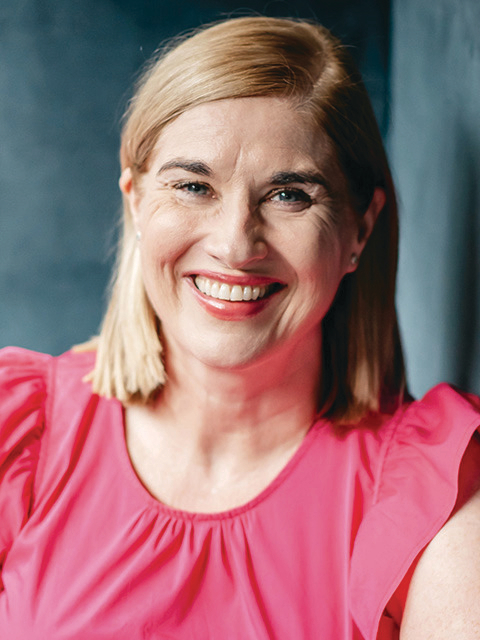
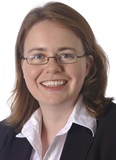
One minute with Carmel Moore, co-founder of One Moment Company
What’s keeping you busy?
I spend my time helping brilliant teams, who are quietly running on fumes, redesign how they work. Tax has always been hard. What’s changed is the sheer volume of simultaneous change: Pillar Two implementation, digital reporting obligations, ERP transformation programmes, AI adoption and competing priorities, all at once, all urgent.
You’ve held senior tax roles both in-house and in advisory. What are the key lessons you’ve learnt?
For in-house, you are a leader first and a tax expert second. In advisory, it is the other way around. Advisory rewards depth, precision and identifying every single possible risk. For in-house, decisions need to be made in the context of commercial reality, operational capacity, competing priorities and imperfect information, and then communicated in plain language. The irony is that many tax teams are full of highly disciplined people operating inside highly undisciplined systems. Personal heroics become the operating model, personal resilience becomes the control framework and individual effort substitutes for clarity, structure, and good organisational design.
Why do some technically strong tax professionals struggle in leadership roles, while others thrive?
Many move into leadership still behaving like the smartest technical expert in the room. They stay too close to the detail, over-answer questions, become the escalation point for everything and, in so doing, prevent their team from thinking independently. The result is a team addicted to urgency and unable to think without it. Another common mistake is confusing responsiveness with leadership. Senior tax people often pride themselves on being available all the time. But as Seneca said: ‘He who is everywhere is nowhere’.
The leaders who make the transition well do things differently. They create clarity and define decision rights. They tolerate proportionate risk. They coach instead of rescuing; they ask better questions instead of immediately providing answers. Strong tax leaders slow the room down when everyone else is accelerating. They reduce noise and simplify.
You’ve described ‘time’ as the essence of leadership. What does that mean for tax?
Tax teams always tell me they don’t have enough time, but in reality many have lost control of attention. The whole ‘drop everything’ mentality means days are fragmented by meetings, messages, escalations and competing urgencies. Busyness has become the performance of leadership.
Tax leaders need to be much more intentional about their time. Not every meeting requires every person. Not every issue deserves immediate escalation. Strong tax teams can say ‘no’.
If you could improve one aspect of tax practice, what would it be?
I would change the way the profession trains and develops people. We treat tax as a solo cognitive sport and train people to solve problems alone, under exam conditions. Then we drop them into organisations where nothing is solved alone. We need to teach and test real project work: collaborating across teams, making decisions with incomplete information and taking shared accountability.
The tax profession needs to train commercial decision-making, prioritisation and ways of working, not just technical capability. We cannot continue adding complexity, regulation and transformation activity onto already overloaded systems and expect performance to improve indefinitely.
One minute with Carmel Moore, co-founder of One Moment Company
What’s keeping you busy?
I spend my time helping brilliant teams, who are quietly running on fumes, redesign how they work. Tax has always been hard. What’s changed is the sheer volume of simultaneous change: Pillar Two implementation, digital reporting obligations, ERP transformation programmes, AI adoption and competing priorities, all at once, all urgent.
You’ve held senior tax roles both in-house and in advisory. What are the key lessons you’ve learnt?
For in-house, you are a leader first and a tax expert second. In advisory, it is the other way around. Advisory rewards depth, precision and identifying every single possible risk. For in-house, decisions need to be made in the context of commercial reality, operational capacity, competing priorities and imperfect information, and then communicated in plain language. The irony is that many tax teams are full of highly disciplined people operating inside highly undisciplined systems. Personal heroics become the operating model, personal resilience becomes the control framework and individual effort substitutes for clarity, structure, and good organisational design.
Why do some technically strong tax professionals struggle in leadership roles, while others thrive?
Many move into leadership still behaving like the smartest technical expert in the room. They stay too close to the detail, over-answer questions, become the escalation point for everything and, in so doing, prevent their team from thinking independently. The result is a team addicted to urgency and unable to think without it. Another common mistake is confusing responsiveness with leadership. Senior tax people often pride themselves on being available all the time. But as Seneca said: ‘He who is everywhere is nowhere’.
The leaders who make the transition well do things differently. They create clarity and define decision rights. They tolerate proportionate risk. They coach instead of rescuing; they ask better questions instead of immediately providing answers. Strong tax leaders slow the room down when everyone else is accelerating. They reduce noise and simplify.
You’ve described ‘time’ as the essence of leadership. What does that mean for tax?
Tax teams always tell me they don’t have enough time, but in reality many have lost control of attention. The whole ‘drop everything’ mentality means days are fragmented by meetings, messages, escalations and competing urgencies. Busyness has become the performance of leadership.
Tax leaders need to be much more intentional about their time. Not every meeting requires every person. Not every issue deserves immediate escalation. Strong tax teams can say ‘no’.
If you could improve one aspect of tax practice, what would it be?
I would change the way the profession trains and develops people. We treat tax as a solo cognitive sport and train people to solve problems alone, under exam conditions. Then we drop them into organisations where nothing is solved alone. We need to teach and test real project work: collaborating across teams, making decisions with incomplete information and taking shared accountability.
The tax profession needs to train commercial decision-making, prioritisation and ways of working, not just technical capability. We cannot continue adding complexity, regulation and transformation activity onto already overloaded systems and expect performance to improve indefinitely.