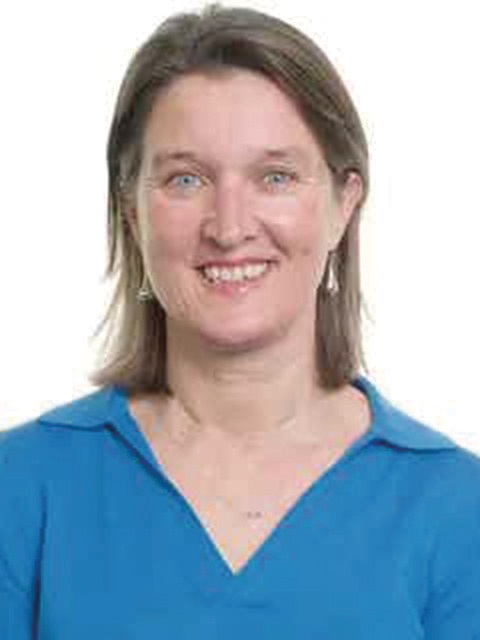
One minute with Ali Sapsford, Head of Tax at RSM UK.
What’s keeping you busy at work?
In my role, I inevitably touch many parts of the business where I am reliant on others’ expertise and horsepower, so a large part of what I do is relationship management, underpinned by honest and regular communication. That includes working more closely with our US colleagues following the announcement of our transatlantic partnership. I’m enjoying learning how things are done ‘over the pond’ and applying the best of both to our tax business.
What do you know now that you wish you’d known at the start of your career?
I came into tax from audit and at the start I had a bit of an inferiority complex about the depth of my technical knowledge. Because of that, I always wanted to play back any complex advice to my then Partner or Senior Manager to ensure I’d understood it correctly. It turns out that ability to ‘translate’ the complex into the simple is a real skill. It took me a while to see it as a strength rather than a weakness, but it has stood me in good stead throughout my career.
In a similar vein, people shouldn’t underestimate the importance of getting the basics right: take ownership of what you do, meet deadlines and keep communication lines open. A big part of relationships is trust, and these basics are key – and can be demonstrated from day 1 of your career.
If you could make one change to tax, what would it be?
I’d like to see legislation introduced with more time for proper consultation. When rules arrive at speed, the results are often unexpected and unintended – Pillar Two and CIR being recent cases in point. Their disjointed administration and compliance requirements, on top of the main corporation tax return, PAYE real time reporting and the new VAT e-filing, make compliance a growing and increasingly demanding part of running a business. For clients, it must feel like a major distraction from core activities.
A good tax system should make it easy for people to pay the right amount of tax. More predictability, stability and transparency would go a long way – with enough time for professionals to scrutinise proposed legislation to ensure it achieves its aims, while remaining practical and workable.
Are there any recent trends you’re seeing in tax?
Tax seems to be becoming increasingly political, both at home and internationally, leading to greater speculation about tax policy and a bias towards short-term decision-making. The resultant uncertainty and instability can make it hard for businesses looking to make much needed long-term investments.
From a professional perspective, we’re engaging with the new Tax Adviser Registration rules. We stand squarely behind the desire to raise standards in the industry, though the legislation is fairly widely drafted. The recently published manual will hopefully help in this regard.
Has a recent case caught your eye?
The Supreme Court judgment in Orsted West [2026] UKSC 12 (formerly Gunfleet Sands) illustrates how tax rules can struggle to keep pace with emerging technologies, which creates uncertainty – a recurring theme in the tax system – and potentially deters investment in sectors that are vital to economic growth.
You might not know this about me but...
I’m a real Germanophile – something that dates back to my university days. I love all things German: the people, the language, the culture, the country. I don’t have much cause to speak German nowadays, but I can still produce a pretty mean 99 Luftballons at the drop of a (karaoke) hat.
One minute with Ali Sapsford, Head of Tax at RSM UK.
What’s keeping you busy at work?
In my role, I inevitably touch many parts of the business where I am reliant on others’ expertise and horsepower, so a large part of what I do is relationship management, underpinned by honest and regular communication. That includes working more closely with our US colleagues following the announcement of our transatlantic partnership. I’m enjoying learning how things are done ‘over the pond’ and applying the best of both to our tax business.
What do you know now that you wish you’d known at the start of your career?
I came into tax from audit and at the start I had a bit of an inferiority complex about the depth of my technical knowledge. Because of that, I always wanted to play back any complex advice to my then Partner or Senior Manager to ensure I’d understood it correctly. It turns out that ability to ‘translate’ the complex into the simple is a real skill. It took me a while to see it as a strength rather than a weakness, but it has stood me in good stead throughout my career.
In a similar vein, people shouldn’t underestimate the importance of getting the basics right: take ownership of what you do, meet deadlines and keep communication lines open. A big part of relationships is trust, and these basics are key – and can be demonstrated from day 1 of your career.
If you could make one change to tax, what would it be?
I’d like to see legislation introduced with more time for proper consultation. When rules arrive at speed, the results are often unexpected and unintended – Pillar Two and CIR being recent cases in point. Their disjointed administration and compliance requirements, on top of the main corporation tax return, PAYE real time reporting and the new VAT e-filing, make compliance a growing and increasingly demanding part of running a business. For clients, it must feel like a major distraction from core activities.
A good tax system should make it easy for people to pay the right amount of tax. More predictability, stability and transparency would go a long way – with enough time for professionals to scrutinise proposed legislation to ensure it achieves its aims, while remaining practical and workable.
Are there any recent trends you’re seeing in tax?
Tax seems to be becoming increasingly political, both at home and internationally, leading to greater speculation about tax policy and a bias towards short-term decision-making. The resultant uncertainty and instability can make it hard for businesses looking to make much needed long-term investments.
From a professional perspective, we’re engaging with the new Tax Adviser Registration rules. We stand squarely behind the desire to raise standards in the industry, though the legislation is fairly widely drafted. The recently published manual will hopefully help in this regard.
Has a recent case caught your eye?
The Supreme Court judgment in Orsted West [2026] UKSC 12 (formerly Gunfleet Sands) illustrates how tax rules can struggle to keep pace with emerging technologies, which creates uncertainty – a recurring theme in the tax system – and potentially deters investment in sectors that are vital to economic growth.
You might not know this about me but...
I’m a real Germanophile – something that dates back to my university days. I love all things German: the people, the language, the culture, the country. I don’t have much cause to speak German nowadays, but I can still produce a pretty mean 99 Luftballons at the drop of a (karaoke) hat.